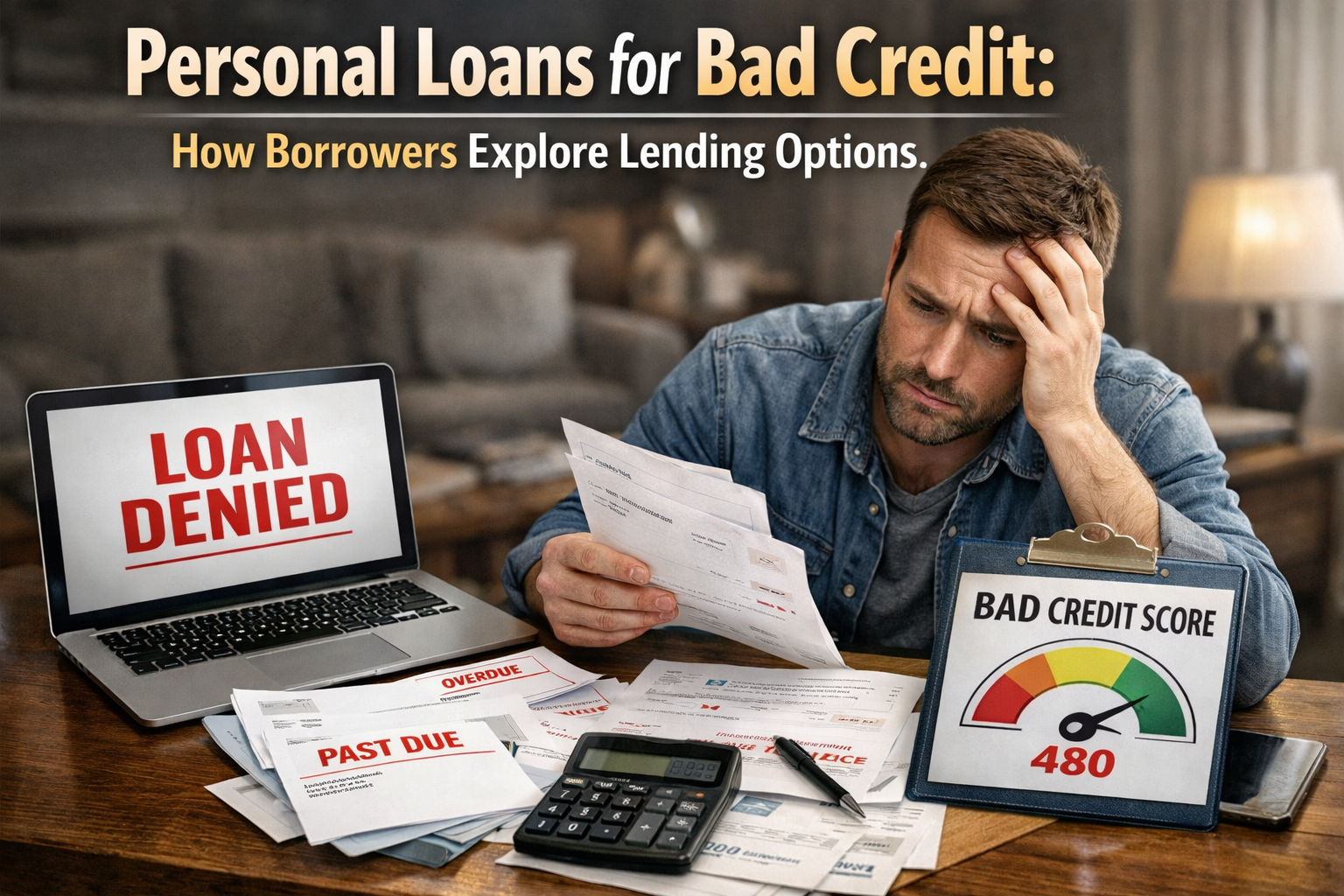
Personal loans for bad credit are designed for individuals who may have limited access to traditional lending products due to past financial challenges. While a low credit score can reduce borrowing options, it does not automatically disqualify someone from obtaining a personal loan. Many lenders in the U.S. consider a broader set of financial factors beyond credit history alone.
Understanding how these loans work, what lenders evaluate, and what borrowers should consider before applying can help reduce risk and support better financial decision-making.
What Are Personal Loans for Bad Credit?
Personal loans for bad credit are typically unsecured installment loans offered to borrowers with lower credit scores or limited credit profiles. These loans provide a fixed amount of money that is repaid over a set period through scheduled monthly payments.
Because they are unsecured, lenders assume more risk, which often results in higher interest rates and fees compared to loans offered to borrowers with strong credit. Loan amounts, repayment terms, and approval standards vary significantly depending on the lender and the applicant’s financial situation.
Borrowers commonly use these loans for short-term needs rather than long-term financing.
How Lenders Evaluate Applications Beyond Credit Scores
While credit scores remain an important factor, many lenders that serve bad-credit borrowers use additional criteria to assess risk. This broader evaluation allows lenders to consider a borrower’s current financial stability rather than relying solely on past credit behavior.
Factors lenders may review include:
- Current income and employment stability
- Monthly expenses and cash flow
- Banking history and account activity
- Existing debt obligations
- Length of time at current job or residence
Some lenders also use alternative data sources, such as utility or rent payment history, to supplement traditional credit reports.
Types of Personal Loans Available to Bad-Credit Borrowers
Borrowers with poor or limited credit may encounter several types of personal loan products.
Online Installment Loans
Many online lenders specialize in personal loans for bad credit. These platforms often offer streamlined application processes and faster funding timelines.
Credit Union Loans
Some credit unions provide personal loan programs for members with lower credit scores. These loans may offer more competitive terms, but membership requirements apply.
Co-Signed Personal Loans
Adding a co-signer with stronger credit may improve approval chances or reduce interest rates. However, the co-signer becomes responsible if payments are missed.
Secured Personal Loans
In some cases, lenders may offer secured loans that require collateral, such as a savings account or vehicle. Secured loans may offer lower rates but involve additional risk.
Each option carries different costs and obligations.
Interest Rates, Fees, and Total Loan Costs
One of the most important considerations for bad-credit personal loans is the total cost of borrowing. Interest rates can be significantly higher than average, and fees may add to the overall expense.
Common costs include:
- Annual percentage rate (APR)
- Origination or processing fees
- Late payment penalties
- Insufficient funds fees
Borrowers should review loan disclosures carefully and calculate the total repayment amount over the full loan term, not just the monthly payment.
Potential Uses for Personal Loans
Personal loans for bad credit are often used for essential or time-sensitive expenses. Common uses may include:
- Emergency car repairs
- Medical or dental bills
- Utility or housing-related expenses
- Consolidating smaller debts
Using loan funds for non-essential purchases may increase financial strain, especially when interest costs are high.
Risks Associated With Bad-Credit Personal Loans
While these loans may provide temporary financial relief, they also carry increased risk for borrowers who are already experiencing financial challenges.
Potential risks include:
- High interest accumulation
- Difficulty meeting monthly payments
- Negative credit impact from missed payments
- Increased overall debt burden
Repeated borrowing or refinancing can create a cycle of debt that becomes harder to manage over time.
When a Personal Loan May or May Not Be Appropriate
A bad-credit personal loan may be appropriate when it addresses a specific need and the borrower has a realistic repayment plan. It may be less suitable for ongoing expenses or situations where income instability makes repayment uncertain.
Borrowers should consider whether the loan:
- Solves a short-term issue
- Fits within their monthly budget
- Reduces or increases overall financial stress
Careful planning helps avoid worsening financial conditions.
Alternatives Borrowers May Consider
Before applying for a personal loan, borrowers may want to explore alternative options that could involve lower costs or less risk.
Alternatives may include:
- Payment plans with service providers
- Assistance programs or nonprofit resources
- Borrowing smaller amounts from trusted contacts
- Credit counseling services
While not always available, alternatives may help reduce reliance on high-cost borrowing.
Responsible Borrowing Practices
If a personal loan is chosen, responsible use is essential.
Best practices include:
- Borrowing only what is necessary
- Making payments on time
- Avoiding additional high-interest debt
- Monitoring finances regularly
Some lenders report payment activity to credit bureaus, which may help demonstrate improved repayment behavior over time.
Long-Term Financial Considerations
Personal loans for bad credit are typically short-term solutions. Long-term financial stability often requires addressing underlying issues such as budgeting, income management, and spending habits.
Developing a financial plan alongside responsible borrowing can help reduce reliance on high-cost loans in the future.
Final Thoughts
Personal loans for bad credit provide access to funds for borrowers who may not qualify for traditional lending products. While these loans can be helpful in specific situations, they often come with higher costs and greater risk.
Borrowers should take time to understand loan terms, compare options, and consider alternatives before applying. When used carefully and repaid responsibly, a personal loan may serve as a temporary financial tool rather than a long-term burden.

Leave a Reply