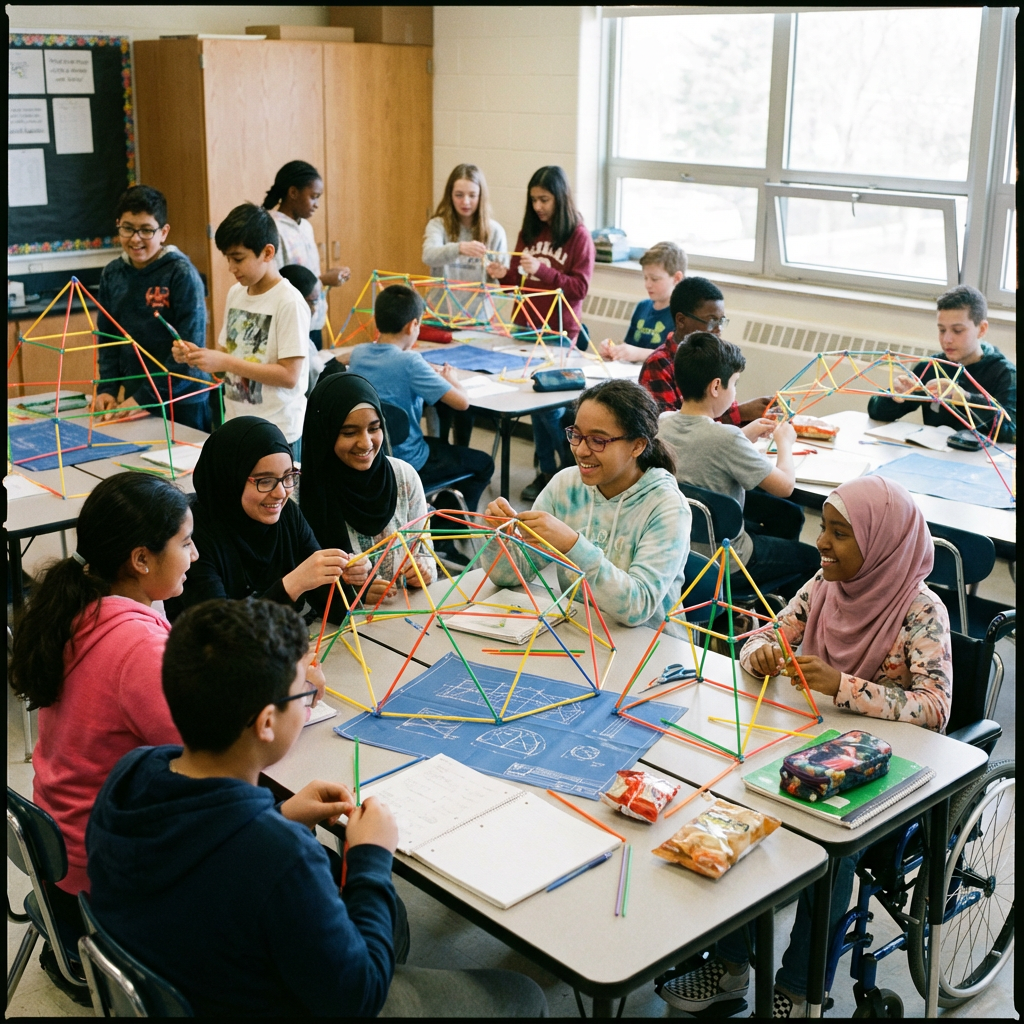
The idea of adding Social-Emotional Learning (SEL) to an already packed academic schedule can feel like one more obligation. However, the most powerful SEL instruction isn’t a separate lesson; it’s the hidden curriculum within the academic work we already do. Math, history, science, and ELA are not just subjects—they are inherently human endeavors filled with collaboration, struggle, ethical dilemmas, and perspective-taking. By making these connections explicit, we teach the whole child without sacrificing a minute of core instruction.
This approach transforms academic challenges into opportunities to practice resilience, empathy, and ethical reasoning, proving that cognitive and emotional growth are inextricably linked.
The Core Integration Framework
Effective integration starts with aligning specific SEL competencies to the natural demands of your subject matter. The five core SEL competencies (self-awareness, self-management, social awareness, relationship skills, and responsible decision-making) aren’t abstract; they are the very skills required to engage deeply with rigorous content.
Rather than creating new activities, we audit our existing lessons through an SEL lens, asking: “Where does this content naturally require perseverance, collaboration, or ethical judgment?” We then highlight and structure those moments intentionally.
Subject-Specific Integration Strategies
In Mathematics: Cultivating a “Thinking Classroom”
Math class is a prime environment for developing self-management and relationship skills through productive struggle.
- Before a challenging problem set, lead a brief mindfulness minute to focus. Teach “stress-check” strategies like pausing to take a deep breath when stuck. Frame mistakes as “data points” that inform the next strategy, celebrating the process of iteration over the speed of a correct answer.
- Use structured group work where each member has a defined role (Facilitator, Recorder, Resource Manager, Skeptic). This teaches accountable teamwork. Implement “group quizzes” where the primary objective is to debate strategies and reach consensus, grading the clarity of their mathematical communication and collaboration as much as the final answer.
- When studying statistics or probability, introduce real-world data related to social justice (e.g., wage gaps, polling data). Pose questions like, “How could this data be presented to mislead someone? What is our responsibility as mathematicians to represent data truthfully?” This builds responsible decision-making and social awareness.
In History & Social Studies: Practicing Empathetic Inquiry
History is the study of human behavior, conflict, and consequence—the ultimate SEL case study.
- When studying a historical event or document, use a “Circle of Viewpoints” routine. Assign students different roles (a soldier, a politician’s spouse, a child, a business owner) and have them articulate that person’s thoughts and feelings. This builds social awareness and challenges simplistic narratives.
- Present historical leaders’ dilemmas not as foregone conclusions, but as live choices. “President Truman had to decide on the atomic bomb. With the information he had, what were the possible options? What were the short and long-term consequences of each? What would a ‘responsible decision’ have required?” This builds complex ethical reasoning.
- Use reflection prompts that link historical themes to personal growth: “The Civil Rights activists practiced immense self-management in the face of provocation. Describe a time you had to manage a strong emotion to achieve a goal. What strategy did you use?”
In ELA & Literacy: Exploring Identity and Relationships
Literature and writing are direct conduits to self-awareness and relationship skills.
- Move beyond literary devices to analyze characters through an SEL lens. “What is this character’s core unmet need? How do their self-management skills fail them in this chapter? What relationship skill do they need to learn?”
- Use journal prompts that connect themes to personal experience. After reading a novel about resilience, ask: “Write about a ‘rock’ and a ‘hard place’ you’ve been between. What did you learn about yourself?” This builds self-awareness.
- Teach specific, respectful language for peer editing (using “I” statements focused on the work). Model how to give and receive feedback as a tool for growth, not judgment, directly teaching relationship skills.
The Teacher’s Role: Making the Implicit Explicit
The key to integration is narration. You must be the commentator who connects the academic task to the SEL skill. Say things like:
- “The persistence you’re showing with this tough equation is exactly what self-management looks like.”
- “Trying to understand this historical figure’s choice, even when we disagree, is an act of social awareness.”
- “The way your group just navigated that disagreement and found a compromise is a master class in relationship skills.”
By consistently highlighting these connections, you validate that the emotional and social work is as important as the academic answer. You stop teaching math and SEL, and start teaching math through SEL, crafting learners who are not only knowledgeable but also resilient, empathetic, and ethically grounded.



Leave a Reply